Tic-Tac-Toe Multiplayer Game
A production-grade real-time multiplayer Tic-Tac-Toe game with AI opponent, WebSocket-based gameplay, and atomic move validation
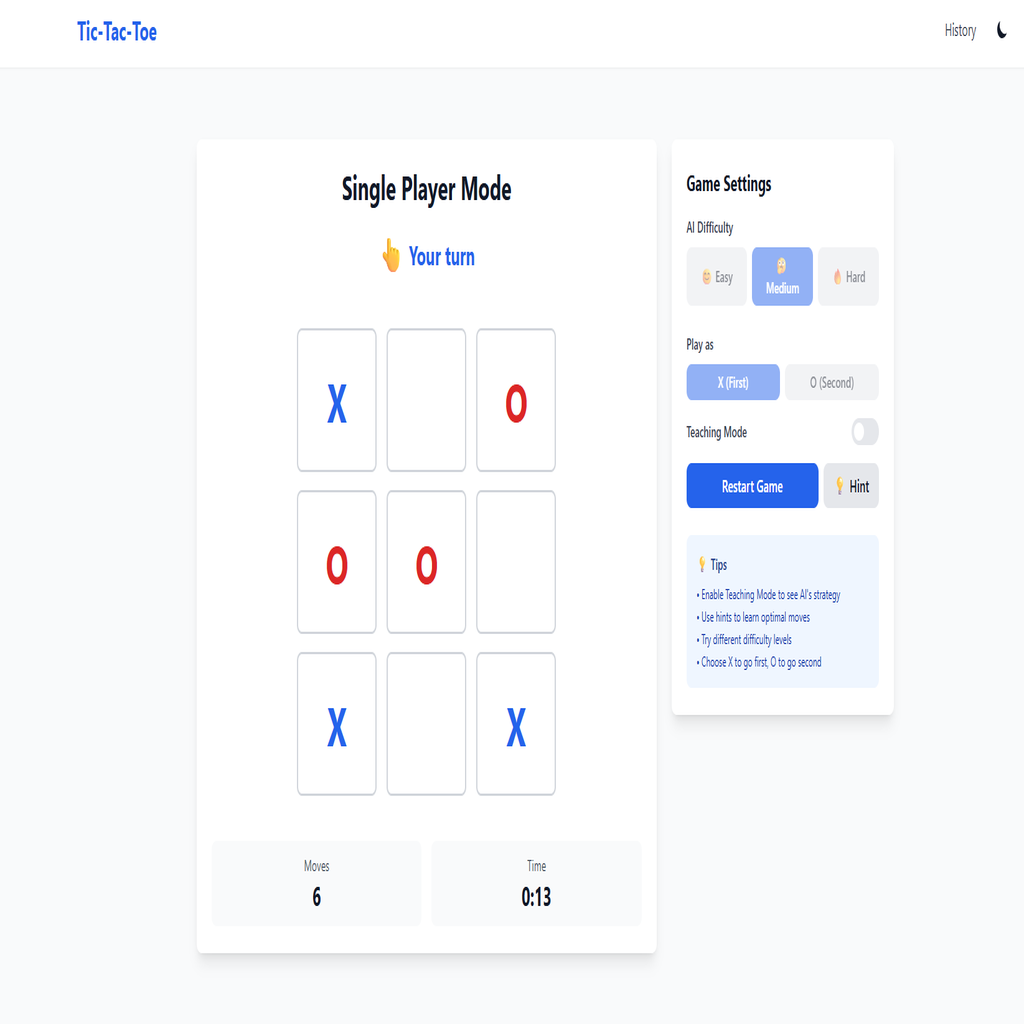
A full-stack multiplayer Tic-Tac-Toe application demonstrating real-time communication patterns and distributed systems design. The backend features a Go WebSocket server for sub-millisecond game events, Node.js REST API for authentication and persistence, with Redis handling atomic move validation via Lua scripting. The frontend is a responsive React SPA with Zustand state management and optimistic UI updates. The system ensures game integrity through Redis-based atomic operations, preventing race conditions in concurrent move scenarios.
- ✓Real-time multiplayer gameplay via WebSocket connections with Go server
- ✓Single-player mode with AI opponent (multiple difficulty levels)
- ✓Atomic move validation using Redis Lua scripts preventing race conditions
- ✓JWT authentication with bcrypt password hashing and session management
- ✓Game state persistence to MongoDB with automatic Redis TTL cleanup
- ✓Responsive mobile-first design with accordion navigation
- ✓Protected routes with automatic redirect after authentication
- ✓Docker containerization with multi-service orchestration
- ✓HTTPS deployment with Let's Encrypt SSL and Nginx reverse proxy
- ✓GitHub Actions CI/CD pipeline for automated deployments
Technical Deep Dive
Race Condition in Concurrent Moves - Two players submitting moves simultaneously could cause invalid game states
Solution
Implemented atomic move validation using Redis Lua scripts that validate, update board state, check win conditions, and publish events in a single atomic operation
Implementation
Atomic Move Validation with Redis Lua
-- Atomic move validation in Redis
local gameKey = KEYS[1]
local movesKey = KEYS[2]
local playerId = ARGV[1]
local cell = tonumber(ARGV[3])

-- Get current game state
local state = redis.call('HGETALL', gameKey)

-- Validate it's player's turn
if state.turn ~= playerId then
    return {'err', 'NOT_YOUR_TURN'}
end

-- Validate cell is empty
local board = cjson.decode(state.board)
if board[cell + 1] ~= '' then
    return {'err', 'CELL_OCCUPIED'}
end

-- Apply move and check winner
board[cell + 1] = state.playerSymbols[playerId]
local winner, winningLine = checkWinner(board)

-- Update state atomically
redis.call('HSET', gameKey,
    'board', cjson.encode(board),
    'turn', getNextPlayer(state),
    'status', winner and 'finished' or 'playing'
)

-- Set TTL on finished games (1 hour cleanup)
if winner then
    redis.call('EXPIRE', gameKey, 3600)
    redis.call('EXPIRE', movesKey, 3600)
end

-- Publish move event to all subscribers
redis.call('PUBLISH', 'game:'..gameId..':events', eventPayload)

return {'ok', 'true', 'state', newState}Cross-platform bcrypt compilation - Native bcrypt module failing in Docker containers built on Windows
Solution
Replaced native bcrypt with bcryptjs (pure JavaScript) to eliminate platform-specific compilation issues in containerized environments
Implementation
WebSocket Connection Manager
// Manager handles WebSocket connections and game events
type Manager struct {
    clients    map[*Client]bool
    games      map[string]map[*Client]bool
    register   chan *Client
    unregister chan *Client
    broadcast  chan GameEvent
    redis      *redis.Client
    nodeAPIURL string
}

// Run starts the manager's event loop
func (m *Manager) Run() {
    for {
        select {
        case client := <-m.register:
            m.clients[client] = true
            log.Printf("[MANAGER] Client connected: %s", client.id)

        case client := <-m.unregister:
            if _, ok := m.clients[client]; ok {
                delete(m.clients, client)
                close(client.send)
                m.removeFromGame(client)
            }

        case event := <-m.broadcast:
            // Broadcast to all clients in the game room
            if clients, ok := m.games[event.GameID]; ok {
                for client := range clients {
                    select {
                    case client.send <- event.Data:
                    default:
                        close(client.send)
                        delete(clients, client)
                    }
                }
            }
        }
    }
}

// persistFinishedGame sends game data to Node API for MongoDB storage
func (m *Manager) persistFinishedGame(event map[string]interface{}) {
    jsonData, _ := json.Marshal(event)
    url := m.nodeAPIURL + "/api/persist-finished"

    ctx, cancel := context.WithTimeout(context.Background(), 10*time.Second)
    defer cancel()

    req, _ := http.NewRequestWithContext(ctx, "POST", url, bytes.NewBuffer(jsonData))
    req.Header.Set("Content-Type", "application/json")

    resp, err := http.DefaultClient.Do(req)
    if err == nil && resp.StatusCode == 200 {
        log.Printf("[MANAGER] Game persisted to MongoDB")
    }
}WebSocket origin validation - Handling dynamic CORS origins for development and production environments
Solution
Created flexible origin checking with wildcard support and environment-based configuration for seamless dev-to-prod transitions
Implementation
WebSocket Origin Validation with Wildcard Support
// NewWebSocketHandler configures origin checking for dev/prod environments
func NewWebSocketHandler(manager *ws.Manager, allowedOrigins []string) *WebSocketHandler {
    originsMap := make(map[string]bool)
    allowAll := false

    // Build whitelist, detect wildcard mode
    for _, origin := range allowedOrigins {
        if origin == "*" {
            allowAll = true // Development mode: allow all origins
        }
        originsMap[origin] = true
    }

    // Configure WebSocket upgrader with dynamic origin checking
    upgrader.CheckOrigin = func(r *http.Request) bool {
        origin := r.Header.Get("Origin")
        if origin == "" {
            return true // Allow same-origin requests
        }

        // Wildcard mode for local development
        if allowAll {
            return true
        }

        // Production: strict whitelist checking
        allowed := originsMap[origin]
        if !allowed {
            log.Printf("[WEBSOCKET] Rejected unauthorized origin: %s", origin)
        }
        return allowed
    }

    return &WebSocketHandler{manager: manager, allowedOrigins: originsMap}
}